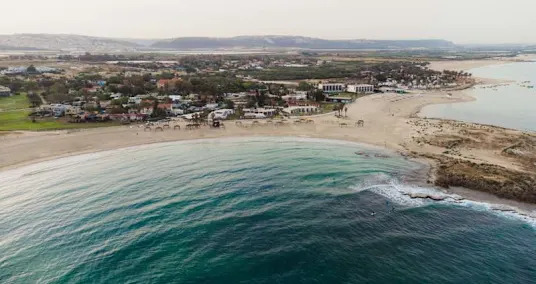
The discovery was made in an ancient shipwreck in the Dor Lagoon near the Carmel Coast, where archaeologists recovered nine pieces of unprocessed iron known as “blooms.”
Researchers from the University of Haifa said Wednesday that an underwater excavation off Israel’s northern Mediterranean coast uncovered what they described as the earliest known cargo of raw iron transported by ship, dating back around 2,600 years, Xinhua reported.
The discovery was made in an ancient shipwreck in the Dor Lagoon near the Carmel Coast, where archaeologists recovered nine pieces of unprocessed iron known as “blooms.” According to the university, the find provides direct evidence of how iron was transported in its earliest commercial stages.
The material was preserved in its original form, having solidified directly in a smelting furnace without undergoing forging or further refinement. Researchers said this distinguishes the cargo from later iron artifacts that typically show signs of shaping or tool-making.
Unlike copper and bronze, which could be melted into liquid form in ancient production processes, iron was heated with charcoal to produce a solid, porous mass. That mass was generally hammered to remove impurities and create denser material suitable for tools and implements.
The recovered blooms showed no indication of that secondary processing stage, suggesting they were transported immediately after production.

Earliest iron shipment discovered in ancient Mediterranean wreck
To determine the age and condition of the cargo, researchers conducted microscopic and chemical analyses.
Radiocarbon dating was also carried out on charred wood embedded in one of the pieces, helping confirm the timeline of the shipment. The findings were published in the journal Heritage Science.
Researchers said the cargo indicates that iron was being moved in raw form from production sites to other locations for further processing, pointing to a level of specialization in ancient manufacturing and trade networks in the Mediterranean.
The University of Haifa said the discovery provides new insight into early iron production and distribution practices in the region.
LATEST POSTS
- 1
 5 Must-Attempt Fascinating Dishes from Around the World
 - 2Trump awarded 1st FIFA Peace Prize by Gianni Infantino at 2026 World Cup draw
- 3What to know about voluntary chocolate recall
- 48 key takeaways from Savannah Guthrie's 'Today' interview on the disappearance of her mother
- 5Figure out How to Modify Your Pre-assembled Home for Greatest Solace and Stylish Allure




- Instructions to Grasp the Innovation Behind 5G Pinnacles\
- Before trips to Mars, we need better protection from cosmic rays
- Misjudged Objections For Solo Voyagers
- Protester climbs on to balcony of Iranian embassy in London
- Story of ‘first Black Briton’ rewritten by advances in ancient DNA technology
- Baidu robotaxi outage in Wuhan caused by 'system failure', police say
- They relied on marijuana to get through the day. But then days felt impossible without it
- New heart disease calculator predicts 30-year risk for young adults
- Etymological Investigation Disclosed: A Survey of \Dominating New Tongues\ Language Learning Application